Helping an aging parent remodel their bathroom for safety and independence
By Dana Whitfield · Updated 2026-09-05
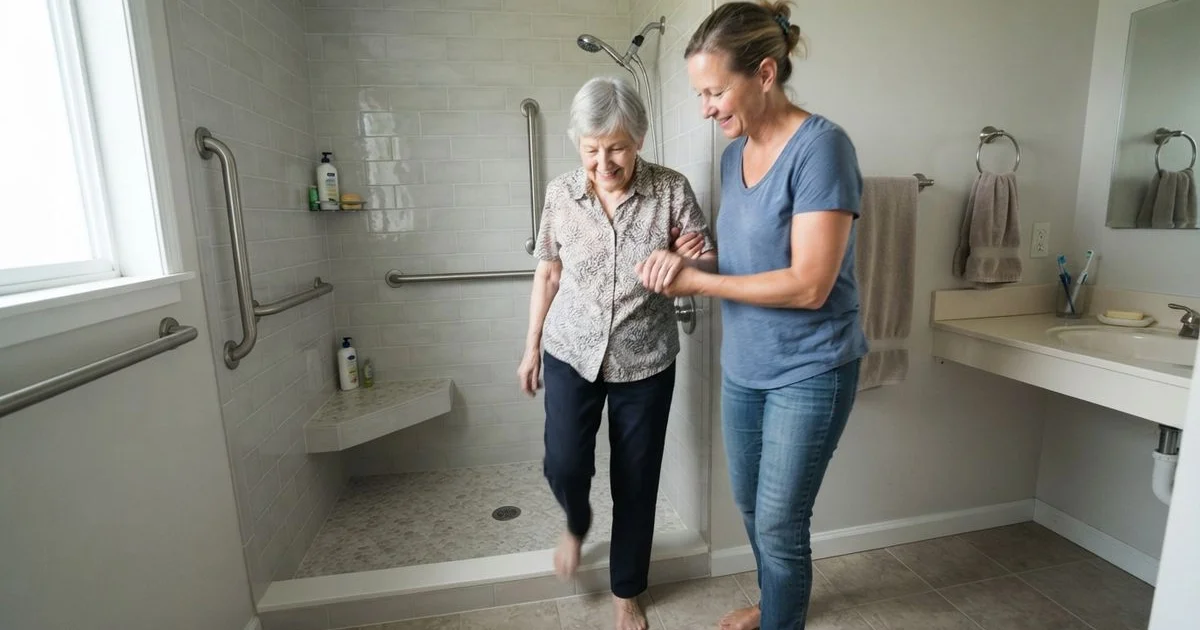
Helping a parent remodel their bathroom for safety is rarely just a construction project. It usually involves a harder conversation first, about aging, independence, and what your parent is and is not ready to accept.
Starting the conversation
The most effective approach usually centers on a specific, recent moment rather than a general statement about getting older. “I noticed you had to hold onto the sink to get out of the shower last week” lands very differently than “you’re not as steady as you used to be.” Framing the goal as staying independent in their own home for longer, rather than a sign of decline, also tends to make the conversation land better.
Deciding scope together, not for them
It is tempting, especially for an adult child managing logistics from a distance, to plan the whole project and present it as a finished decision. This usually backfires. Your parent will be the one living with the finished bathroom every day, so their preferences on layout, fixtures, and even pace of the project deserve real weight, even where you might make a different choice yourself.
A phased approach if a full remodel is too much at once
| Phase | What it typically includes | Why start here |
|---|---|---|
| Phase 1: low-disruption safety basics | Grab bars, non-slip flooring, improved lighting | Fast, inexpensive, addresses a large share of fall risk |
| Phase 2: fixture upgrades | Comfort-height toilet, adjustable or handheld showerhead | Moderate cost, meaningful daily comfort improvement |
| Phase 3: full accessibility remodel | Curbless shower, wider doorway, layout changes | Highest cost and disruption, best when mobility needs are clearer |
Starting with Phase 1 also gives you and your parent a low-stakes way to see how the process feels before committing to something larger.
Getting professional input on what is actually needed
An occupational therapist can do a home safety assessment and identify specific risks and needed modifications based on your parent’s actual mobility, which is more precise than guessing from a distance. Some Area Agencies on Aging in Connecticut can help connect families with this kind of assessment, and the same starting point is often useful for identifying financial assistance for the project.
Respecting the pace your parent sets
Even after a parent agrees in principle to a remodel, the pace of moving forward matters. Pushing to schedule the contractor the same week as the first conversation can feel like the decision has already been taken out of their hands. Giving a few weeks between agreeing to the idea and finalizing a scope, unless there is a real safety urgency, tends to result in a project your parent feels ownership over rather than one that happened to them.
Coordinating with siblings
If more than one sibling is involved, decide early who is handling day-to-day coordination with the contractor, separately from who is contributing financially. These are two different responsibilities, and assuming they will sort themselves out tends to create friction partway through the project when decisions need to be made quickly.
Finding a contractor who does this work well
Accessibility remodeling has details, like proper grab bar anchoring and correctly sloped curbless showers, that matter more here than in a typical cosmetic project. Accessible and aging-in-place specialists on this site focus specifically on this kind of work, and comparing options with the rest of the family before deciding can help everyone feel included in a decision that affects a parent’s daily life.
It can also help to bring your parent along to meet a shortlisted contractor before work begins, even briefly. Hearing the plan directly, rather than secondhand from an adult child, often makes the whole project feel less like something being done to them and more like a choice they are part of.
Connecticut bathroom remodelers on this site are ranked using a published, transparent process, explained in full on the methodology page, which can help the family agree on a shortlist before reaching out.
Questions people ask
- How do I bring up the topic without upsetting my parent?
- Framing the conversation around specific recent moments, like a slip or a close call, tends to work better than a general statement about aging. Emphasizing that the goal is staying independent in their own home longer, not moving somewhere else, also helps.
- Who should be involved in deciding the scope of the remodel?
- Your parent should have the final say wherever possible, since it is their home and their daily experience of it. Involving their physician or an occupational therapist can help identify specific needs you might not think to ask about.
- What if my parent refuses any changes at all?
- Starting with the least visible, least disruptive change, like adding a properly anchored grab bar or improving lighting, is often easier to agree to than a full remodel. Small wins can open the door to a larger conversation later.
- Can multiple siblings share the cost of a parent's accessibility remodel?
- Yes, and it is worth discussing openly among siblings early, along with who will coordinate the project logistics. Splitting cost without splitting the coordination responsibility can create friction later, so agree on both upfront.