Financial assistance for aging-in-place bathroom modifications in Connecticut
By Dana Whitfield · Updated 2026-08-15
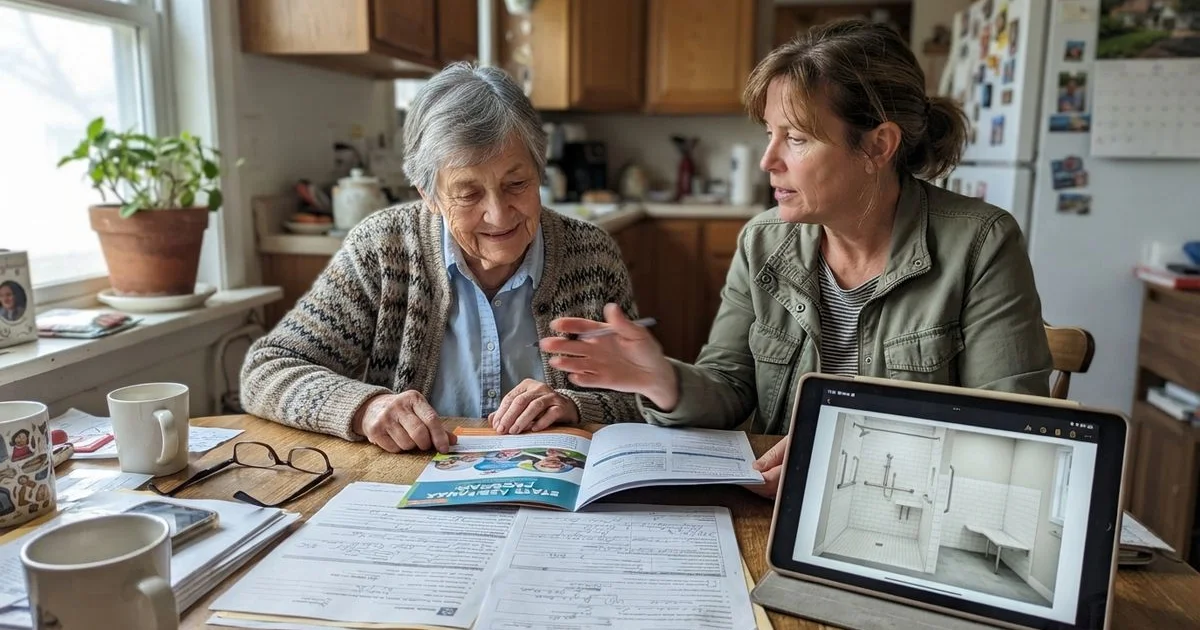
This guide covers general information about assistance programs, not eligibility advice. Program availability, funding levels, and requirements change; confirm current details directly with each program.
Paying for accessibility modifications does not always have to come entirely out of pocket. Several programs exist specifically to help Connecticut residents make their homes safer to age in, though most require some research to find the right fit for a specific situation.
Where to start looking
| Source | Who it typically helps | What to check |
|---|---|---|
| Connecticut Area Agencies on Aging | Seniors, based on age and sometimes income | Current program offerings and application windows change; contact your regional agency directly |
| Connecticut Department of Aging and Disability Services | Seniors and people with disabilities statewide | State-administered programs and referrals to local resources |
| VA Home Improvements and Structural Alterations (HISA) grant | Veterans with qualifying conditions | Eligibility depends on service connection and medical need |
| Medicaid Home and Community-Based Services waivers | Medicaid-eligible individuals needing modifications to remain at home | Waiver programs and covered modifications vary; ask your Medicaid case worker |
| USDA Rural Repair and Rehabilitation grants | Very low-income homeowners in eligible rural areas | Income limits and geographic eligibility apply |
| Local nonprofits and Rebuilding Together chapters | Low-income homeowners, often prioritizing seniors and people with disabilities | Availability depends on local chapter funding and volunteer capacity |
Why Medicare usually will not cover this
A common assumption is that Medicare pays for home modifications the way it pays for durable medical equipment like a wheelchair. It generally does not: walk-in showers, grab bars, and similar modifications are classified as home improvements, not medical equipment, even when a doctor recommends them. Some Medicare Advantage plans have started offering limited home modification benefits as a supplemental perk, so it is worth a direct call to your specific plan to check, but do not assume standard Medicare will cover any part of the project.
Making the most of a partial benefit
Few programs cover the full cost of a remodel, so the realistic approach for most families is combining a partial grant or benefit with personal funds or financing for the remainder. Applying for assistance programs takes time, sometimes weeks to months depending on the program, so it is worth starting the application process well before you plan to begin construction, rather than waiting until you have already selected a contractor.
Keeping records for your application
Most assistance programs ask for documentation of income, the specific modification being requested, and sometimes a physician’s or occupational therapist’s recommendation. Gathering these documents before you start applying, rather than scrambling once a deadline appears, shortens the overall process considerably. It is also worth keeping copies of every application and any correspondence, since some programs require follow-up documentation partway through the review.
A phased approach if funding is limited
If a full accessibility remodel is not affordable even with assistance, prioritizing changes by impact makes sense: grab bars and non-slip flooring first, since they address a large share of fall risk at low cost, followed by a comfort-height toilet, and finally a curbless shower conversion when funds allow. This spreads the investment over time without leaving the highest-risk hazards unaddressed in the meantime.
Finding a contractor experienced with this work
Not every remodeler has deep experience with accessibility-specific work, and the details, like proper grab bar blocking and correctly sloped curbless shower floors, matter more here than in a typical cosmetic remodel. Accessible and aging-in-place specialists on this site are a reasonable starting point, and comparing a few Connecticut bathroom remodelers before committing helps confirm a contractor has actually done this specific type of project before, not just general renovation work.
Ask any contractor you are considering whether they have worked with clients using an assistance program before, since some are familiar with the paperwork and inspection requirements those programs involve, which can smooth out an otherwise slow process.
This site’s approach to evaluating and ranking contractors, including those focused on accessibility work, is explained on the methodology page.
Questions people ask
- Does Medicare pay for a walk-in shower or grab bars?
- Original Medicare generally does not cover home modifications like walk-in showers or grab bar installation, since these are considered home improvements rather than medical equipment. Some Medicare Advantage plans offer limited home modification benefits, so it is worth checking your specific plan.
- Are there Connecticut-specific programs for accessibility remodeling?
- Connecticut's Department of Aging and Disability Services and some local Area Agencies on Aging administer programs that can help with home modifications for seniors and people with disabilities, though eligibility and funding levels vary and change over time. Contact your local Area Agency on Aging directly for current options.
- Can veterans get help paying for accessibility modifications?
- The U.S. Department of Veterans Affairs offers grant programs, including the Home Improvements and Structural Alterations (HISA) grant, that can help cover the cost of accessibility modifications for eligible veterans with service-connected or non-service-connected conditions.
- What if I do not qualify for any assistance program?
- Financing options like a home equity loan or line of credit remain available regardless of program eligibility, and a smaller, phased approach, starting with grab bars and non-slip flooring before a larger shower conversion, can spread the cost over time.