Bathroom remodeling: when to DIY and when to hire a licensed pro
By Dana Whitfield · Updated 2026-07-14
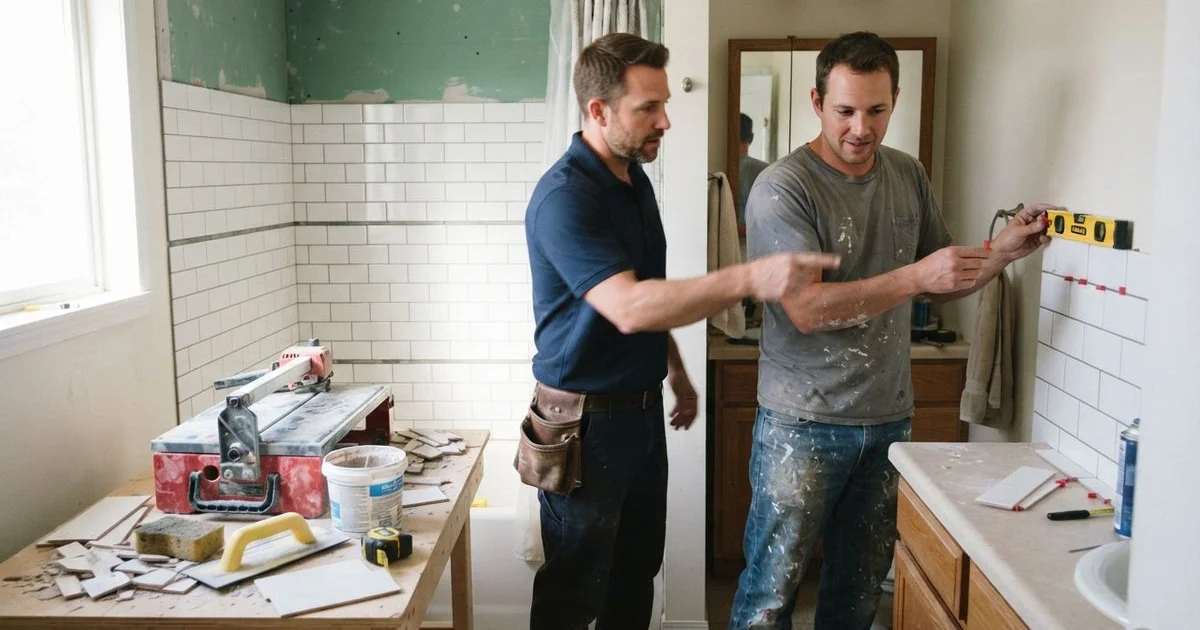
Some parts of a bathroom remodel are genuinely within reach for a handy homeowner. Others carry real consequences if they go wrong, and a bathroom is one of the least forgiving rooms in a house for a mistake, because water finds every gap you missed. Here is a practical way to sort one from the other.
Good DIY candidates
These tasks rarely require a permit and the downside of a mistake is limited to redoing the work yourself:
- Repainting walls and trim with moisture-resistant paint
- Swapping a faucet, showerhead, or towel bar
- Replacing a vanity mirror or light fixture (where wiring is not being altered)
- Recaulking around a tub or shower
- Installing a new toilet seat or updating cabinet hardware
Tasks to hand to a licensed pro
- Anything behind the tile. Waterproofing membranes, backer board, and shower pan liners have to be installed correctly the first time. A leak here does not show up right away, and by the time it does, the repair involves opening the wall or floor.
- Plumbing relocation. Moving a toilet, tub, or shower drain changes the rough-in plumbing and usually needs a permit and inspection.
- Electrical work. Bathrooms require GFCI protection and specific code clearances around water sources. Miswired outlets in a wet room are a genuine safety hazard, not just a cosmetic issue.
- Structural changes. Removing or moving a wall, widening a doorway, or reconfiguring the room’s footprint needs someone who can tell you whether a wall is load-bearing before it comes down.
A side-by-side view
| Task | DIY-friendly? | Why |
|---|---|---|
| Painting, caulking, hardware swaps | Yes | No permit, low consequence of a mistake |
| New fixtures (faucet, toilet, vanity) with plumbing unchanged | Usually | Straightforward if supply lines are not being moved |
| Tile and waterproofing | No | Mistakes are hidden until real damage appears |
| Plumbing relocation | No | Requires permit, inspection, and code knowledge |
| Electrical in a wet area | No | Safety code requirements, real shock and fire risk |
The permit question
In Connecticut, homeowners can generally pull a permit and do work themselves on a home they own and occupy, but that work is inspected to the same standard a licensed contractor’s work would be. That is a meaningful detail: a DIY project that would need a permit if a contractor did it still needs one when you do it yourself, and it still has to pass. If you plan to sell within a year or two of the remodel, or if the property is a rental, hiring a licensed contractor also avoids disclosure and liability questions down the line. If you want to see how permitting and inspection fit into a bigger project, the full bathroom renovation walkthrough lays out the whole sequence.
A middle path: hybrid projects
You do not have to pick one extreme. Plenty of homeowners handle the cosmetic layer themselves (paint, hardware, a new mirror) while hiring a pro for the wet-area work (tile, waterproofing, plumbing) inside the same project. This can meaningfully lower the total cost while keeping the highest-risk steps in professional hands. Just be upfront with your contractor from the start about which parts you plan to do yourself, since it affects their scheduling and their quote.
What DIY actually saves versus what it risks
Labor typically makes up close to half the cost of a bathroom remodel, so doing a task yourself can meaningfully cut a budget. But weigh that against the cost of a mistake: redoing a poorly waterproofed shower after mold sets in usually costs more than hiring a professional would have in the first place, on top of the disruption of tearing out work you already paid for once. Before deciding, ask honestly whether you have done this specific task before, whether you have the tools for it, and whether a mistake would be a minor inconvenience or a real problem. Tile setting, for example, is forgiving to redo if it looks uneven; a shower pan liner installed wrong is not forgiving at all, because you will not know it failed until water is already where it should not be.
Insurance is another factor homeowners tend to overlook. A licensed contractor typically carries liability coverage that protects you if something goes wrong during the work. If you do the work yourself and it later causes water damage, your homeowner’s policy may treat that differently than damage from a licensed contractor’s error, so it is worth a quick call to your insurer before taking on any wet-area work yourself.
If you decide to bring in a professional for any part of the job, Connecticut bathroom remodelers on this site are scored on real customer sentiment, which is a useful second data point alongside price when you are comparing candidates.
This site’s scoring approach is published in full on the methodology page.
Questions people ask
- Can I legally do my own plumbing or electrical work in Connecticut?
- Homeowners can generally pull their own permit and do work on a home they own and occupy, but the work still has to pass the same inspection a licensed contractor's work would. Rental properties and any work you plan to sell shortly after typically require a licensed contractor.
- What is the single riskiest DIY mistake in a bathroom remodel?
- Waterproofing. A missed or poorly installed waterproofing membrane behind tile does not show a problem for months, sometimes years, by which point the damage is inside the wall and floor structure, not just cosmetic.
- Is painting and fixture swapping safe to DIY?
- Yes, for most homeowners. Repainting, replacing a faucet or showerhead, swapping a mirror or light fixture, and caulking are all reasonable DIY tasks that do not touch structural, plumbing, or electrical systems.
- How do I know when a project has gotten beyond my skill level?
- If the job involves moving a drain line, opening a load-bearing wall, running new electrical circuits, or anything requiring a permit and inspection, it is time to call a licensed pro, even if you started the project yourself.