Tub-to-shower conversion: what the process actually involves
By Dana Whitfield · Updated 2026-07-18
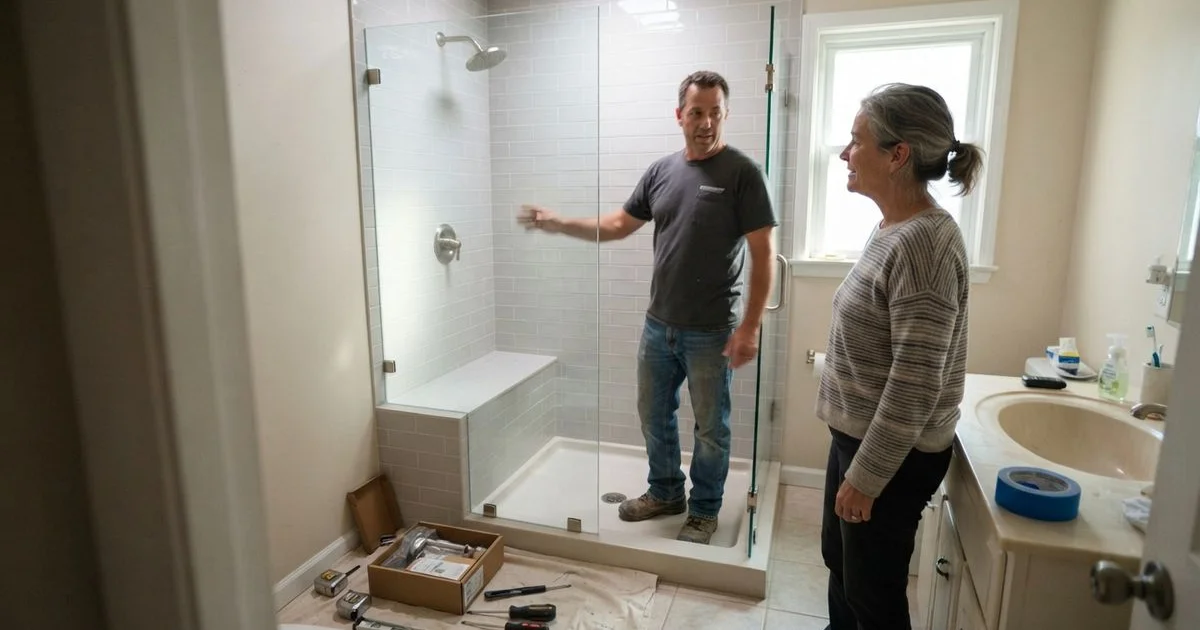
Converting a bathtub into a walk-in shower is one of the most requested remodels in Connecticut, and for good reason: it is faster and less invasive than a full renovation while making a real difference in day-to-day usability. Here is what the process actually looks like once you have chosen to move forward.
If you are still comparing options, walk-in shower and tub conversion specialists on this site are a good place to see who handles this specific project type locally.
The three main system types
The type of shower system you choose changes both the process and the price:
- Prefabricated shower insert. A one- or multi-piece fiberglass or acrylic unit installed as a whole. Fastest option, least customizable.
- Custom tiled shower. Built in place with backer board, a waterproofing membrane, and tile. More labor and time, but fully customizable in size and look.
- Curbless custom shower. A tiled shower with no threshold, built flush with the floor using sloped subfloor framing and a linear or center drain. The most accessible option and the most involved to build.
What a typical timeline looks like
| Step | Prefab insert | Custom tiled or curbless |
|---|---|---|
| Demolition of old tub and surround | 1 day | 1 day |
| Plumbing adjustment (if drain moves) | 1 day | 1 – 3 days |
| Framing and subfloor prep | Not usually needed | 1 – 2 days |
| Waterproofing and tile | N/A (unit is one piece) | 3 – 5 days |
| Enclosure and glass or curtain | 1 day | 1 day |
| Total | 2 – 3 days | 6 – 10 days |
Realistic cost ranges
Cost scales with the system type, the enclosure, and any accessibility features. As a general guide: a prefab insert with a framed glass door and no accessibility add-ons often lands in the $4,800 to $6,500 range. Moving up to a custom tiled shower with a frameless glass door pushes that toward $9,500 to $13,000. A curbless custom shower with full accessibility features, such as a built-in bench and grab bars, typically runs $15,500 to $21,000. Your actual number depends heavily on whether the drain is moving and what condition the subfloor is in once the old tub comes out.
Enclosure choices: curtain, framed, or frameless
The enclosure is often the most visible decision in the whole project. A shower curtain is the least expensive option and offers the most flexibility if you ever want to change the look. A framed glass door is a mid-point: solid and cost-effective, with visible metal framing. A frameless glass door costs more but reads as cleaner and more open, which matters if the bathroom is small. None of these choices are right or wrong; they trade off cost, maintenance, and how the finished space will look and feel day to day.
What to check before demolition starts
Once the old tub is out, the contractor should confirm the subfloor is solid and dry before framing or tiling begins. This is also the point where any hidden water damage from years of a leaking tub surround typically surfaces. Ask your contractor upfront how they plan to handle a surprise here, and get it in writing that any additional cost from unexpected repairs will come to you as a change order before they proceed, not as a surprise on the final invoice.
Getting more than one quote
Because system type, enclosure, and accessibility features each move the price independently, quotes for the same bathroom can vary widely depending on what a contractor assumes you want. Ask each contractor to quote the same system type and enclosure so you are comparing like for like, and confirm whether their number includes disposal of the old tub and any drywall repair around the old surround. Bathroom remodelers across Connecticut are searchable by category on this site, which makes it easier to line up two or three quotes for the exact same scope before you commit.
This site’s rankings and cost ranges are built from a published methodology; see the full explanation of how listings are scored.
Questions people ask
- How long does a tub-to-shower conversion take?
- A straightforward conversion with a prefabricated shower insert can take as little as 2 to 3 days. A custom tiled or curbless shower with new plumbing and glass typically takes 1 to 2 weeks.
- Do I need a permit to convert a tub to a shower?
- In most Connecticut towns, yes, if the drain location or plumbing is changing, or if the project includes electrical work. A straight swap using the existing drain footprint sometimes qualifies for a simpler process, but check with your local building department before assuming.
- Is a curbless shower worth the extra cost?
- It depends on your priorities. A curbless shower costs more because it requires sloped subfloor work and careful waterproofing, but it is the most accessible option and tends to look more open. If accessibility or resale to an older buyer pool matters to you, it is often worth it.
- Can I keep my existing shower plumbing and just change the enclosure?
- Yes, if the drain stays in the same place and the plumbing is in good condition. This is the fastest and least expensive version of a conversion, since it avoids opening the floor for new rough-in work.