Cracked, loose, or outdated tile: signs it is time to reflooring your bathroom
By Dana Whitfield · Updated 2026-08-07
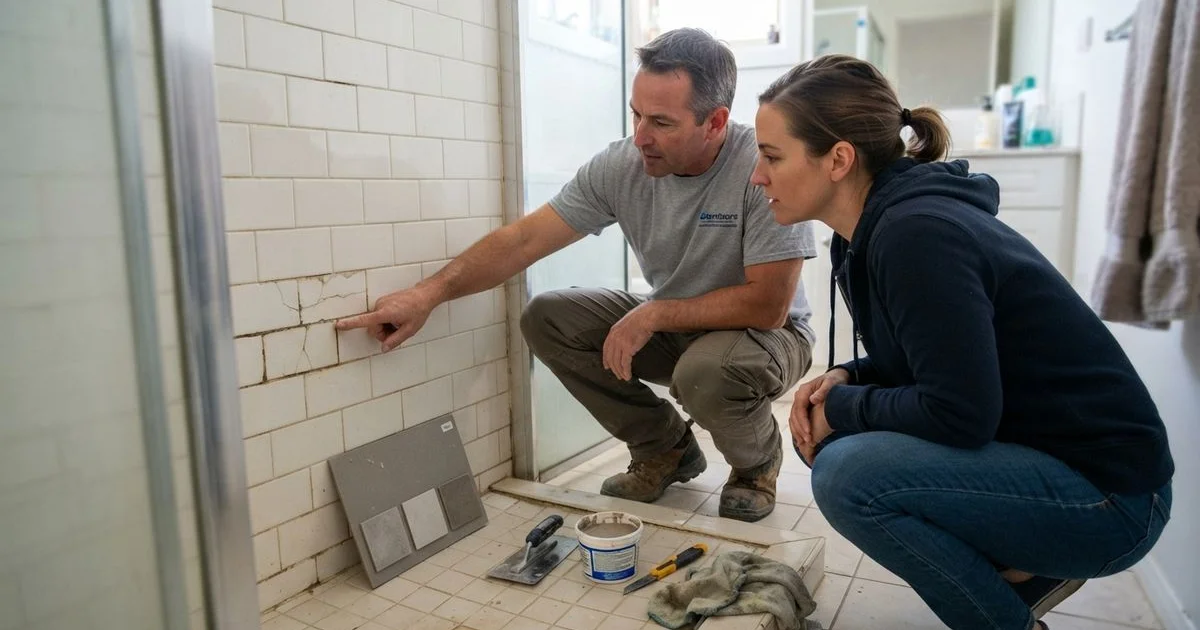
Bathroom tile fails for two very different reasons: normal cosmetic aging, or a moisture problem happening out of sight. Telling the two apart before you call anyone saves time and, often, money.
Signs that point to a cosmetic issue
- A single cracked or chipped tile from an impact, with no cracking pattern elsewhere
- Grout that looks dull or slightly discolored but is dry, firm, and intact
- Tile style that is simply dated, with no cracking, hollow spots, or discoloration
- Caulk that has yellowed or shrunk at the tub or shower edge, without any softness in the surrounding wall
These are worth addressing for appearance or minor maintenance, but they are not urgent from a structural standpoint.
Signs that point to a moisture problem
- Multiple tiles cracking in a line or cluster, which often indicates movement in the subfloor or backer board underneath
- Tile that sounds hollow when tapped, suggesting it has separated from the surface below
- Grout or caulk that stays soft, discolored, or grows mildew no matter how often it is cleaned
- A musty smell near the shower or tub that persists after cleaning
- Visible staining on the ceiling or wall of the room below a second-floor bathroom
If you notice any of these, the priority is finding out what is happening behind the tile before deciding on a fix, not simply replacing what is visible.
What a professional actually checks
| Check | What it reveals |
|---|---|
| Tap test across the tile surface | Hollow spots where tile has separated from the substrate |
| Moisture meter reading near grout lines | Whether water is present behind the tile, not just visible on the surface |
| Inspection of the shower pan liner or waterproofing membrane, once tile is removed | Whether the original waterproofing failed or was never properly installed |
| Subfloor condition check | Whether the wood has softened or delaminated from sustained moisture exposure |
Why patching over a moisture problem backfires
Regrouting or replacing a few tiles over an area with hidden moisture damage covers the symptom without addressing the cause. Water finds the same weak point again, and by the time it shows up a second time, it has often spread further, which turns a contained repair into a larger one. If any of the moisture-related signs above are present, a proper fix means removing tile in the affected area, checking the waterproofing membrane and subfloor, and replacing anything compromised before new tile goes back on.
When a full retile makes sense versus a spot repair
A spot repair is reasonable when the problem is contained to a small area with no sign of moisture and the surrounding tile is in good condition. A full retile becomes the better option once damage is spread across a wall or floor, once the original waterproofing has failed, or when the existing tile style is being changed anyway as part of a broader bathroom update. If you are already planning a full retile, it is also worth thinking about when to schedule the work, since contractor availability and material lead times shift throughout the year.
What to do while you wait for an assessment
If you notice signs of a possible moisture problem but cannot get a professional in right away, avoid using the affected shower or tub if possible, and keep the area as dry as you can in the meantime. Continuing to run water over an area with hidden damage gives the problem more time to spread before it is addressed, even if the surface tile still looks intact.
Getting a second opinion before committing to a fix
Because a hollow-sounding tile can mean anything from a minor installation quirk to a subfloor that needs to be rebuilt, it is worth getting more than one assessment before agreeing to a large-scope repair. A short visit from a second tile professional, or comparing notes with a Connecticut bathroom remodeler who specializes in tile work, can confirm whether the recommended scope actually matches what is happening behind the surface.
If you are past the point of a spot repair, tile and flooring specialists on this site are worth comparing before you commit to a full retile, since waterproofing and tile-setting quality varies a lot between contractors.
This directory’s contractor rankings follow a published process; see the methodology page for details.
Questions people ask
- Is a single cracked tile a sign of a bigger problem?
- Not always. A single cracked tile from a dropped object is usually just a cosmetic fix. Multiple cracked tiles in a pattern, or cracks that reappear after repair, are more likely a sign of subfloor movement or moisture underneath.
- How can I tell if grout problems mean water is getting behind the tile?
- Discolored or soft grout, a musty smell near the shower, or tile that sounds hollow when tapped are all signs water may already be behind the surface. A professional can check with a moisture meter if you are not sure.
- Can I just tile over the old tile instead of removing it?
- Sometimes, if the existing tile is flat, well-adhered, and there is no moisture damage underneath. But this is not the right move if any of the warning signs below are present, since it seals in a problem instead of fixing it.
- How long does bathroom tile typically last?
- Well-installed tile with a proper waterproofing membrane underneath can last 20 years or more. Tile that starts failing well before that is usually a sign the original installation skipped a step, most often waterproofing.