The best time of year to remodel a bathroom in Connecticut
By Dana Whitfield · Updated 2026-09-08
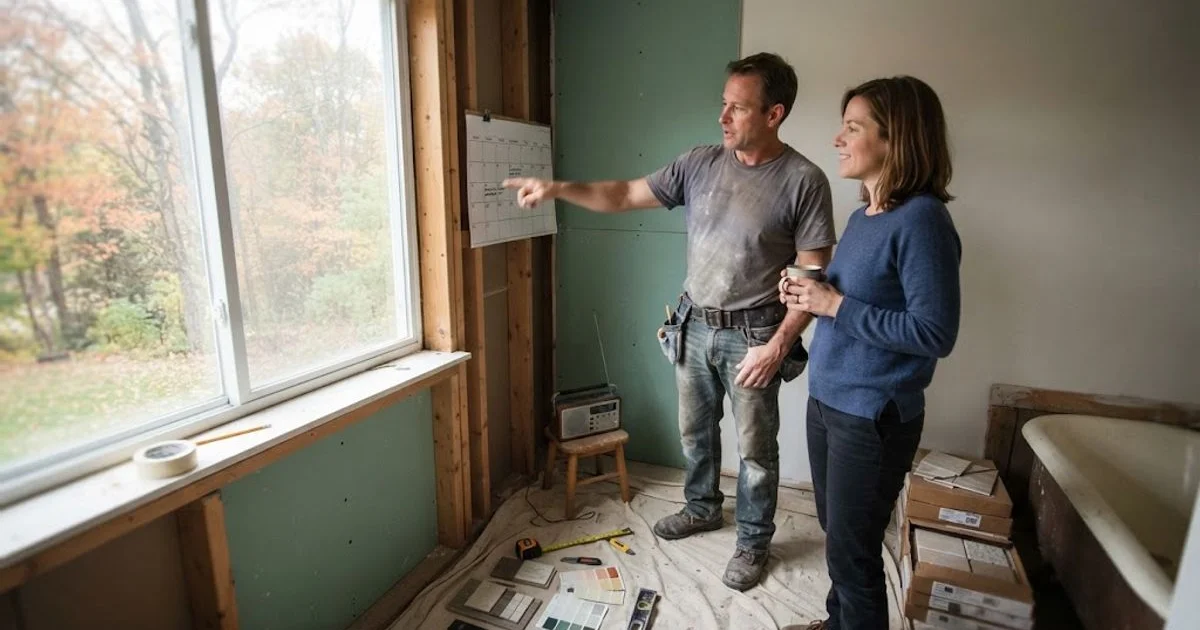
Unlike an outdoor project, a bathroom remodel is not weather-dependent, which means the “best” time to do one has more to do with contractor schedules and material lead times than the calendar.
How demand shifts through the year
| Season | What tends to happen |
|---|---|
| Spring (March – May) | Demand rises as homeowners plan projects around warmer months; contractor schedules fill up |
| Summer (June – August) | Peak demand, especially for larger renovations; longest wait times for a good contractor |
| Fall (September – November) | Demand starts to ease; a reasonable window to get on a schedule without a long wait |
| Winter (December – February) | Typically the quietest season for interior work; contractors often have more open availability |
Because bathroom work happens indoors, contractors who also do exterior projects, like siding or decking, sometimes shift toward interior jobs in winter, which can mean more capacity and, occasionally, more flexibility on scheduling or price.
Why winter is often underrated for this project
Homeowners tend to associate winter with holding off on home projects, but a bathroom remodel does not have the outdoor-weather constraints that make winter a bad time for roofing or siding. If your priority is getting onto a reputable contractor’s calendar quickly rather than waiting months, late fall through winter is worth considering specifically because fewer homeowners are thinking about it at that time.
Material lead times to plan around
Certain materials, particularly custom or imported tile, natural stone, and some specialty fixtures, can have longer lead times around the holidays due to manufacturer and shipping schedules. If your project depends on a specific material, confirm its current lead time with your contractor or supplier before finalizing a start date, rather than assuming it will arrive on the same schedule as a summer order.
Working backward from a target date
If you have a specific date in mind, whether it is a holiday gathering, a planned sale, or simply wanting the disruption over with, work backward by at least six to eight weeks. That covers design and material decisions, ordering time, and getting onto a contractor’s active schedule. Add more buffer if you are set on a specific custom material or if you are trying to book during the busier spring and summer months.
When a specific season makes sense for you
Timing is not purely about contractor availability. If your household relies on a single bathroom, you may prefer scheduling around a trip or a stretch when the disruption is easiest to absorb, regardless of what season has the shortest contractor wait. Families with school-age children sometimes prefer summer, when the household routine has more flexibility, even though it is the busiest season for contractors. There is no universally correct answer here, only a trade-off between your own scheduling preferences and the contractor availability described above.
Booking ahead versus waiting for an opening
Good contractors, regardless of season, tend to book out several weeks to a couple of months in advance. Reaching out as soon as you know you want the work done, even before you have finalized every design decision, secures your place in the schedule and gives you more room to make those decisions without feeling rushed. Waiting until you have everything perfectly planned before making the first call often just adds the booking lag on top of your planning time.
What does not change with the season
Regardless of when you start, the fundamentals of a good hiring process stay the same: get multiple quotes for the identical scope, verify licensing and insurance, and put everything in writing before work begins. A slower season might make it easier to get a contractor’s attention, but it does not substitute for doing this due diligence.
Getting started regardless of season
Whatever time of year you are reading this, the first useful step is the same: get a sense of realistic scope and cost, then start requesting quotes from a shortlist of contractors. Connecticut bathroom remodelers on this site can be compared before you reach out, using a scoring approach explained on the methodology page, which helps you build that shortlist regardless of the season.
Questions people ask
- Is there a slow season for bathroom remodelers in Connecticut?
- Late fall through winter tends to be quieter for interior projects like bathroom remodels, since it does not depend on outdoor weather the way roofing or exterior work does. This is often the easiest time to get on a good contractor's schedule.
- Does the season affect how long the project takes?
- Indirectly, through material lead times, which can stretch around the holidays for certain tile or fixture orders, and through contractor scheduling, which is generally tighter in spring and early summer.
- Should I wait for a slow season to save money?
- It can help modestly, since a contractor with more open schedule slots has more room to be flexible on timing and sometimes on price. The bigger cost drivers, like size, finish level, and scope, still matter far more than the season.
- When should I start planning if I want the work done by a specific date?
- Work backward from your target date by at least six to eight weeks to account for design decisions, material ordering, and getting onto a contractor's schedule, longer if custom materials or a busy season are involved.