Lead paint safety when remodeling a bathroom in an older Connecticut home
By Dana Whitfield · Updated 2026-08-23
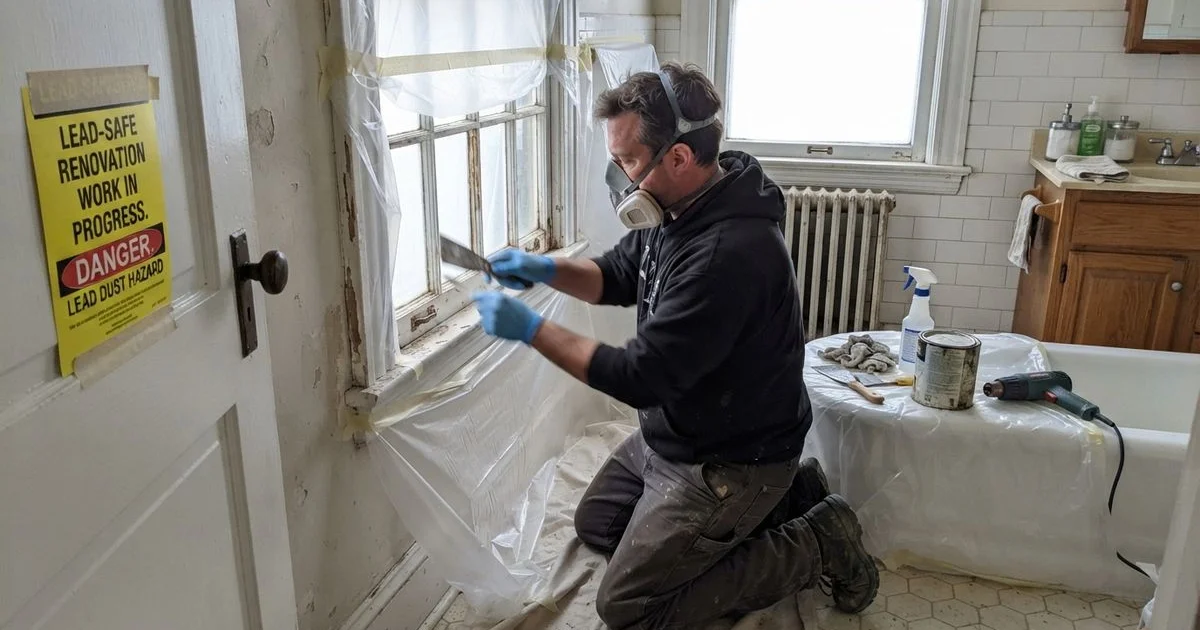
This guide covers general safety information, not medical advice. For specific health concerns related to lead exposure, consult a physician; for testing, use a certified lead inspector.
If your Connecticut home was built before 1978, there is a real chance the paint in your bathroom, including under newer coats, contains lead. This matters specifically during a remodel, because the renovation process is exactly the kind of activity, sanding, cutting, demolition, that disturbs paint and creates the dust and chips that pose the actual health risk.
Why 1978 is the line
The federal government banned lead-based paint for residential use in 1978, which is why homes built before that date are presumed to potentially contain it under EPA rules, unless tested and confirmed otherwise. This is not specific to Connecticut, but it is especially relevant here given how much of the state’s housing stock predates that year.
What the EPA rule actually requires
Contractors performing renovation, repair, or painting work that disturbs painted surfaces in pre-1978 homes are required to be EPA Lead-Safe Certified and to follow specific containment and cleanup procedures. This applies to most bathroom remodels in an older home, since removing tile, trim, or fixtures typically disturbs painted surfaces nearby.
| Requirement | What it means in practice |
|---|---|
| Certified renovator on-site | At least one person on the crew has completed EPA lead-safe training |
| Work area containment | Plastic sheeting seals off the space to contain dust and debris |
| Minimized dust-generating methods | Wet sanding or other lower-dust techniques are used instead of dry sanding when possible |
| Verified cleanup | The area is cleaned and checked using a specific verification method, not just a visual check |
| Documentation | Records of the work practices used are kept, in case of a later question |
Questions to ask a contractor before demolition
Before work starts in an older bathroom, ask directly whether the contractor is EPA Lead-Safe Certified, whether they plan to test the specific surfaces being disturbed, and what containment measures they will use. A contractor experienced with older Connecticut homes should be able to answer these without hesitation, since this comes up often in a state with as much pre-1978 housing as this one has.
What happens if lead paint is confirmed
Confirming lead paint is present does not mean the project cannot proceed. It means the work has to follow the containment and cleanup procedures described above. This can add a modest amount of time and cost to a project, mostly from the containment setup and more thorough cleanup, but it is what keeps dust and paint chips from spreading into the rest of the home or exposing the household, especially young children, during the renovation. While you have a contractor focused on safety details, it is also worth confirming the electrical and ventilation code requirements for the room are being handled correctly.
If you are also renting out part of the property
Landlords in Connecticut renovating a bathroom in a pre-1978 rental unit have an additional obligation: federal law requires disclosure of known lead hazards to tenants, and the same lead-safe work practice rules apply to renovation work performed in occupied rental units. If this applies to your situation, confirm with your contractor how they plan to communicate the work schedule and any temporary relocation needs to your tenant.
Protecting your household during the project
Beyond hiring a properly certified contractor, a few household-level precautions reduce risk further. Keep young children and pregnant household members away from the work area entirely while renovation is active, not just during the noisiest demolition hours. Avoid entering the containment area yourself, since the plastic sheeting is there specifically to keep settled dust from spreading into living spaces. After the project wraps up and the contractor confirms cleanup verification, a simple household cleaning of nearby rooms with a wet cloth, rather than dry dusting, is a reasonable extra step for peace of mind.
Choosing a contractor for this kind of project
Not every contractor routinely works in pre-1978 homes or maintains current lead-safe certification, so this is worth confirming directly rather than assuming. Connecticut bathroom remodelers on this site can be compared before you commit, and this site’s approach to evaluating and ranking them is explained on the methodology page.
Questions people ask
- How do I know if my bathroom has lead-based paint?
- Any home built before 1978 is presumed to potentially have lead-based paint under federal rules, unless it has been tested and confirmed otherwise. A certified lead inspector can test specific surfaces if you want a definitive answer before work begins.
- Is lead paint dangerous if I am not sanding or removing it?
- Intact, undisturbed lead paint is generally considered lower risk. The danger comes from disturbing it: sanding, scraping, cutting into painted trim or plaster, or demolition that creates dust and paint chips.
- Do I have to hire an EPA lead-safe certified contractor?
- Federal rules require contractors performing renovation work that disturbs paint in pre-1978 homes to be EPA lead-safe certified and to follow specific work practices. This applies to most bathroom remodels in an older home, since demolition typically disturbs painted surfaces.
- What does lead-safe work practice actually involve?
- Containing the work area with plastic sheeting, minimizing dust-generating methods like dry sanding, and thoroughly cleaning the area afterward using specific verification methods, rather than a standard cleanup.