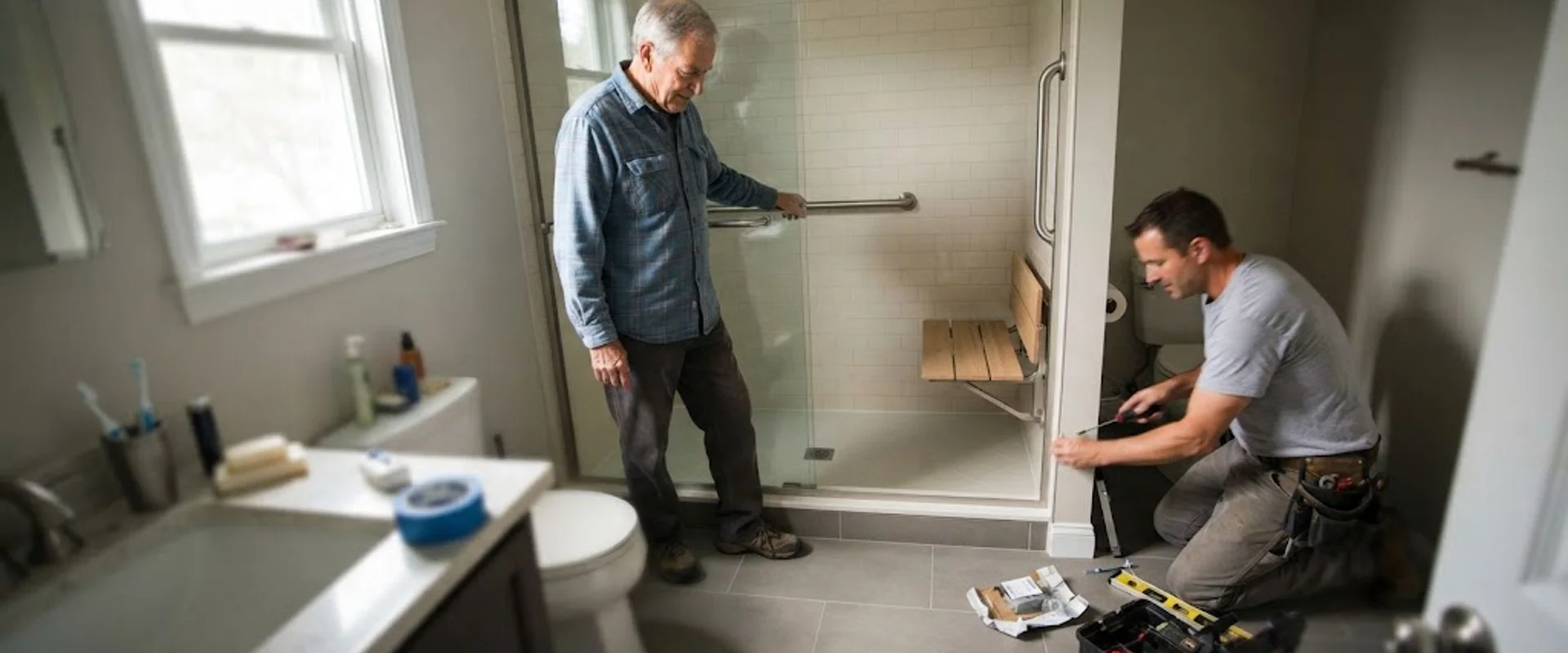
Accessible and aging-in-place remodeling covers the changes that let someone stay in their home safely as mobility, balance, or vision changes over time. In a bathroom, that usually means a curbless or low-threshold shower, a bench or fold-down seat, blocking in the walls for grab bars (not just towel bars pretending to be grab bars), a comfort-height toilet, wider door openings for a walker or wheelchair, slip-resistant flooring, and lever-style faucets that don't require gripping and twisting. Lighting and floor transitions matter as much as the fixtures, since falls are more often caused by poor visibility or uneven surfaces than by the shower itself.
When you're vetting a contractor for this kind of work, ask specifically about their experience with ADA and universal design guidelines, whether they coordinate with occupational therapists or CAPS-certified designers (Certified Aging-in-Place Specialist), and how they handle wall reinforcement for future grab bar installs even if you don't need them yet. Get a clear look at past projects with curbless showers, since drainage and waterproofing details separate a good install from one that leaks into the subfloor within a few years.
We've reviewed and scored 6 remodelers in Norwalk who do this type of work, weighing licensing, project reviews, communication, and how well their portfolio matches accessible design specifically. See the full ranked breakdown at Norwalk's best bathroom remodelers, and read how we score contractors on our methodology page.