What a bathroom remodel costs in Connecticut and what changes the price
By Dana Whitfield · Updated 2026-07-06
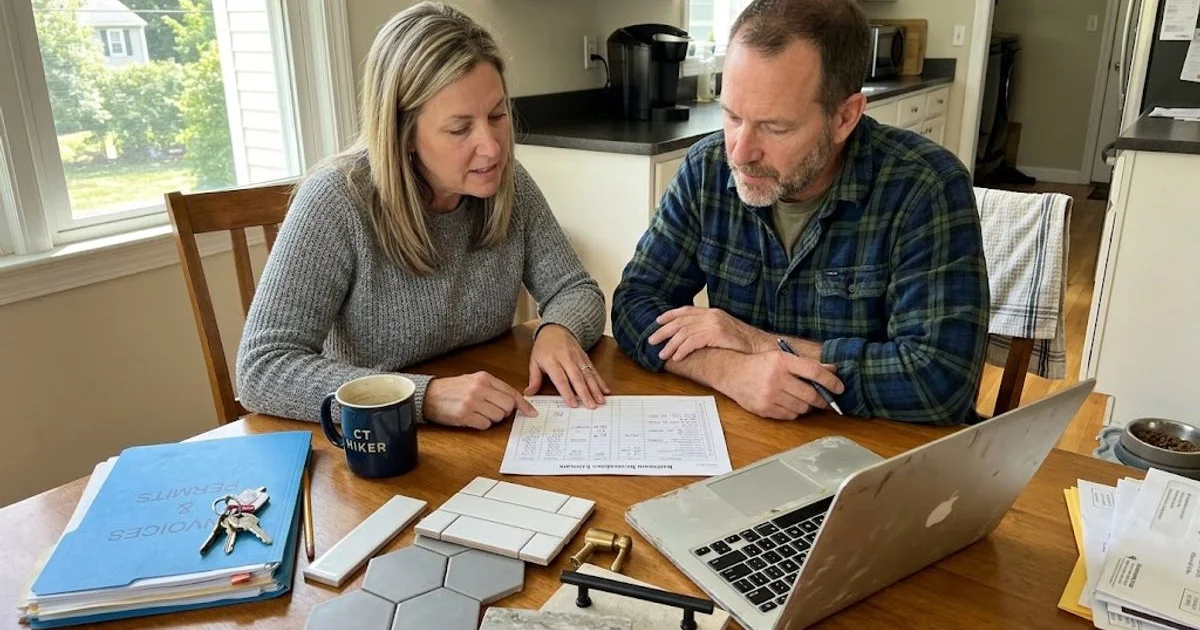
Ask five different contractors what a bathroom remodel costs and you will get five different answers, because the honest answer is “it depends.” What follows are the ranges that actually apply once you know your size, finish level, and scope, plus the specific choices that push the number up or down.
Before you request quotes, it helps to see who does this work locally. Connecticut bathroom remodelers are scored on real customer sentiment, not just star ratings, so you can shortlist a few before you start collecting numbers.
Typical price ranges by scope
For a bathroom in the common 35 to 100 square foot range, here is roughly what different scopes of work cost at a mid-range finish level:
| Scope of work | Typical range | What it includes |
|---|---|---|
| Cosmetic refresh | $3,800 – $5,500 | New fixtures, paint, vanity, surfaces; layout and plumbing stay put |
| Full renovation, same layout | $11,000 – $15,500 | Full gut and rebuild, fixtures and plumbing stay in their current spots |
| Full renovation with layout changes | $15,500 – $21,500 | Same as above, plus moving walls or the room’s footprint |
| Renovation with plumbing relocation | Add roughly 25% | Moving the toilet, tub, or shower drain to a new spot |
These ranges assume mid-grade materials. A budget finish level (stock fixtures, laminate surfaces) can come in around 30% lower, while a high-end finish with custom tile and premium fixtures runs 60% to 160% higher depending on how far upscale you go.
What actually moves the price
Four things drive most of the swing between a low quote and a high one:
- Size. Cost scales close to per-square-foot, so a small powder room costs meaningfully less than a large primary bathroom of the same finish level.
- Finish level. Stock fixtures and laminate surfaces sit at one end; custom tile, natural stone, and designer fixtures sit at the other. This is usually the single biggest lever a homeowner controls.
- Plumbing moves. Keeping the toilet, tub, and shower where they already are keeps costs down. Relocating any of them means new rough-in work, which adds both labor and, often, a permit.
- Structural or layout changes. Widening a doorway, removing a wall, or reconfiguring the room adds framing, drywall, and sometimes engineering review on top of the base renovation cost.
Accessibility-focused work follows its own scale: basic safety upgrades like grab bars and a raised toilet typically run $1,500 to $2,300, while a full accessibility remodel with a roll-in shower and wider doorway can reach $8,000 to $12,000 depending on the mobility equipment it needs to accommodate.
Getting quotes that are actually comparable
Two quotes for “a bathroom remodel” can differ by thousands of dollars simply because the contractors assumed different scopes. Before you compare numbers, make sure every quote answers the same three questions: does it assume the current layout or a new one, does it include demolition and disposal, and does it specify the tile and fixture grade by name rather than “standard.” A quote that is vague on any of these three is not comparable to one that spells them out, no matter how the bottom line looks.
If you want a sanity check before you start calling contractors, this site’s own cost estimator tools let you enter your size, finish level, and scope and see a rough range before anyone sets foot in your home. It will not replace an in-home quote, but it is a reasonable starting point for a budget conversation.
Financing and timing
Cost is only half the planning question. If you are weighing whether to pay out of pocket or finance the work, financing and payment plans are common for larger renovations. And if you are trying to decide whether the spend is worth it in the first place, especially with resale in mind, whether a remodel is worth the money is worth weighing before you commit to a scope.
This site’s rankings and cost data are built from a published, transparent process; see the methodology page for how listings and estimates are put together.
Questions people ask
- What is the average cost of a bathroom remodel in Connecticut?
- A standard full renovation that keeps the existing layout typically runs in the low five figures, with cosmetic refreshes costing less and layout changes or plumbing moves costing more. The exact number depends on size, finish level, and scope.
- Does moving plumbing lines really add that much to the cost?
- Yes. Relocating supply and drain lines means opening walls or floors, which adds labor and sometimes a permit. Expect roughly a quarter more on top of a comparable remodel that leaves plumbing in place.
- Are quotes from different Connecticut contractors usually close to each other?
- Not always. Quotes vary with a contractor's overhead, crew size, and how they source materials. Getting two or three quotes for the same scope of work is the best way to see where the real market rate sits for your project.
- Can I lower the cost without cutting corners on quality?
- Keeping the existing layout, reusing the plumbing footprint, and choosing mid-grade tile and fixtures instead of custom or natural stone are the three biggest levers. Cosmetic refreshes cost roughly half of a full renovation.